Attic Mold and Ice Dams
Attic mold in this climate is nearly always a heat problem wearing a water costume. Understanding the sequence tells you which contractor you actually need.
The sequence, in order
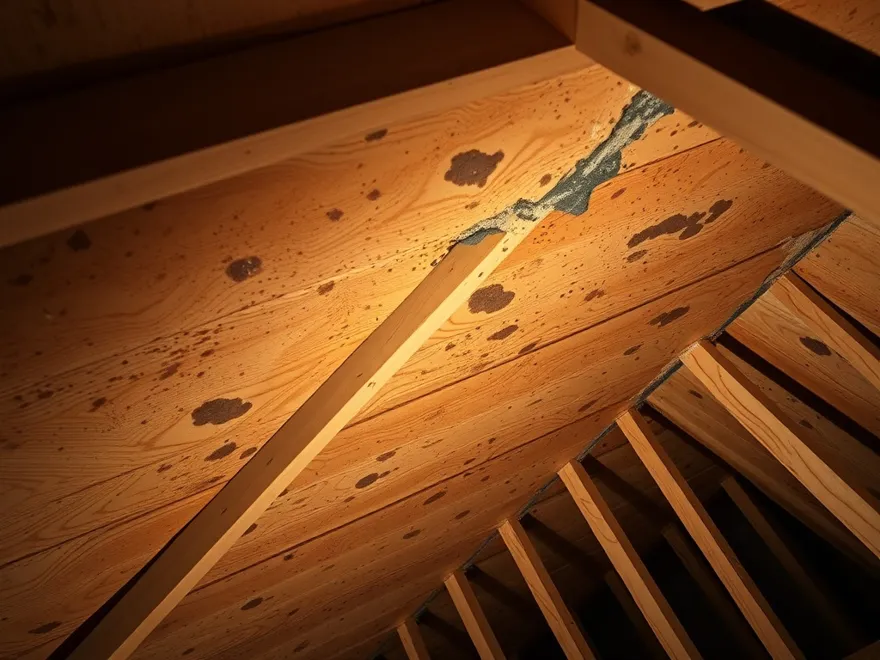
Rochester averages close to 100 inches of snow a year, and attic mold here typically appears on the north-facing slope of the roof deck first because that surface stays coldest.
Air sealing and insulating a Rochester attic runs $1,200-3,500 and addresses the cause; remediating the sheathing alone is $1,500-4,500 and addresses the symptom.
- Warm air leaks from the living space into the attic - around light fixtures, the attic hatch, plumbing stacks, and gaps in the top plate.
- That warm air heats the underside of the roof deck.
- The bottom of the snowpack melts even though the outside air is well below freezing.
- Meltwater runs down to the eave, which overhangs unheated space and stays cold, and refreezes there.
- The ice ridge grows. Later meltwater pools behind it and works up under the shingles.
- Water enters the deck, the top plate, sometimes the wall cavity below. It stays damp for weeks because nothing in an attic in February dries quickly.
Two houses on the same street can behave completely differently. The one with recessed lights in the top-floor ceiling and a poorly sealed attic hatch will form ice dams; the one without may not.
Attic mold often appears as dark patching on the north-facing slope of the roof deck first, because that slope stays coldest and condenses most readily.
Why remediation alone is the wrong purchase
You can have the sheathing cleaned and treated, and it will look correct in April. If nothing has changed about the heat escaping into the attic, the same thing happens next winter. The mold contractor is not being dishonest by quoting only the cleaning - that is the job they do - but the durable fix is air sealing and insulation, and sometimes ventilation.
The practical order is: seal the air leaks, get insulation to a sensible depth, confirm intake and ridge ventilation are actually working and not blocked by insulation, then remediate what has already grown.
What to look for from the ground
A thick band of ice along the eave with icicles hanging from it is the visible signature. So is a roof where the snow has melted in patches over the heated part of the house but stayed thick over the porch or garage.
Inside, look at the ceiling of top-floor rooms in late winter - especially near exterior walls and around any recessed lighting. A faint brown ring that was not there in autumn is the early warning.
In the attic itself, check the north slope of the deck and the area directly above the bathroom fan. A fan vented into the attic rather than through the roof is a surprisingly common find, and it is a mold generator all on its own.
Attic or ceiling staining?
Describe the staining and when you first noticed it, and say whether you have had ice at the eaves. A local contractor will tell you whether this is a remediation job, an insulation job, or both.
Or call (877) 701-2518